Separated Bike Lanes in Lakewood

Share Separated Bike Lanes in Lakewood on Facebook Share Separated Bike Lanes in Lakewood on Twitter Share Separated Bike Lanes in Lakewood on Linkedin Email Separated Bike Lanes in Lakewood link
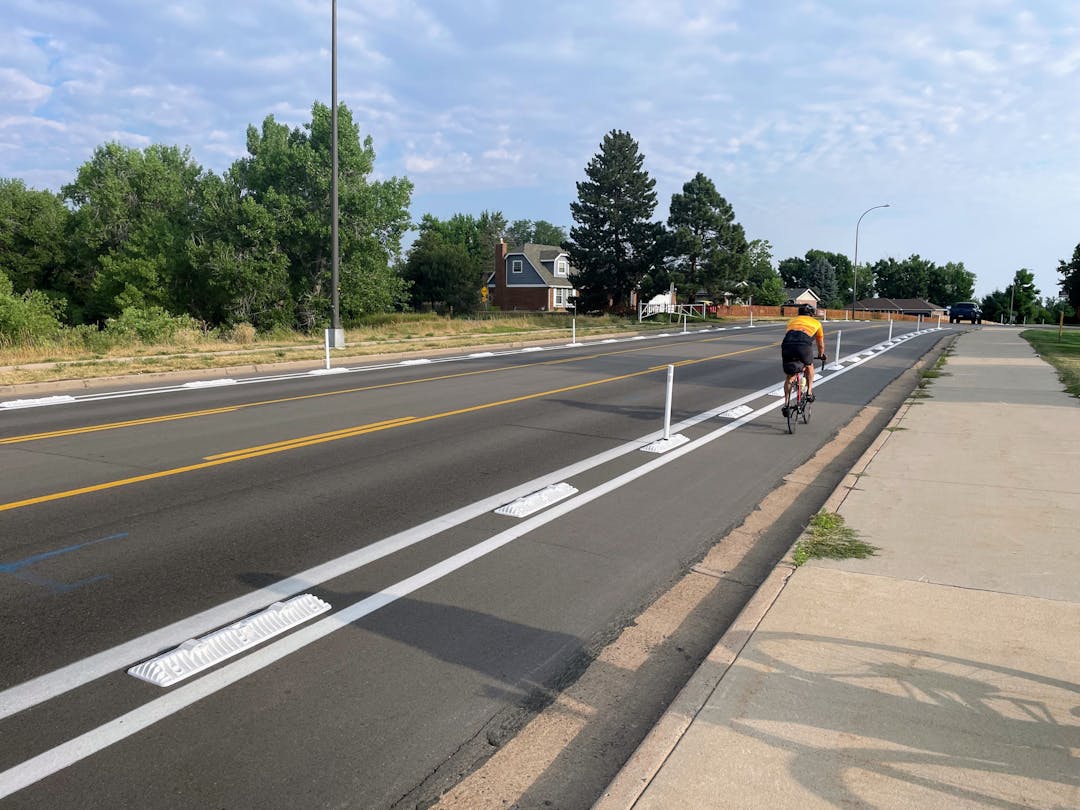
A bicyclist riding in a bike lane separated from the road with plastic curbs and posts

Lakewood is dedicated to creating a safe, comfortable, and connected bicycle network to support bicycling as an accessible mode of transportation for people of all ages and abilities. Besides having numerous health benefits, bicycling as a mode of transportation has the potential to relieve traffic congestion, improve air quality and increase overall mobility in the community.

What is a separated bike lane?

A separated bike lane, also known as a protected bike lane, is defined by the Federal Highway Administration as “an exclusive facility for bicyclists that is located within or directly adjacent to the roadway and that is physically separated from motor vehicle traffic with a vertical element." 

Because they are physically separated from vehicular traffic, separated bike lanes can contribute to increased bicycling volumes by appealing to less-confident riders who may not feel comfortable riding a bicycle directly adjacent to a moving vehicle. They can also improve overall safety on the roadway in the following ways:

• Increasing motorists’ awareness of the bicycle facility.

• Preventing improper use of the bike lane as a turning, acceleration, or parking lane.

• Reducing vehicle speeds by visually narrowing the roadway.

Lakewood installed the city’s first separated bike lanes in 2024 on Denver West Parkway, Garrison Street between Jewell and Alameda avenues, and a small section of Harlan Street near Alameda Avenue. These lanes utilize plastic curbs and posts as the vertical element separating the bike lane from the roadway as shown in the image above, with the exception of a short segment of Garrison Street south of Mexico Avenue where parked vehicles serve as the separating element.


2026 installations

City Council has approved funding for two different separated bike lane projects in conjunction with annual repaving operations in spring 2026:

1st Avenue – Parking-Protected Bike Lane (Garrison Street to Dover Street)

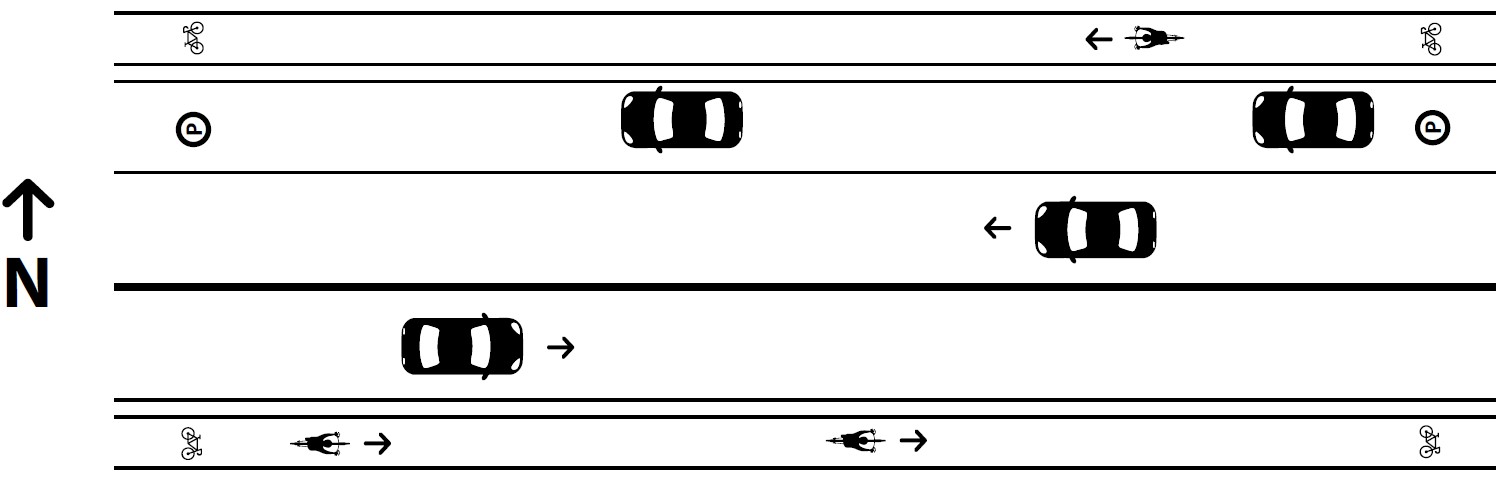
Between Garrison Street and Dover Street, the existing combination bike/parking lane on the south side of the road will be removed and replaced with a buffered (double white line) bike-only lane. The bike/parking lane on the north side will remain, but the bike and parking lanes will switch places so that the bike lane is adjacent to the curb and the parking lane serves as a separation between the bike lane and the rest of the road. The resulting configuration is shown in the diagram below:
The parking lane on the south side of the road will be removed based on several parking occupancy counts conducted by transportation staff showing that the on-street parking is consistently underutilized. Additionally, the north side of the road gets more sun and will pose fewer maintenance challenges than a parking-protected bike lane on the south side of the road would have posed for plowing and sweeping the bike lanes.

For more information about parking-protected bike lanes, please visit the FAQ near the bottom of this page.

In addition to improving safety for people who bicycle on 1st Ave, especially those who ride their bikes to nearby schools, this project is part of implementing the recommendations in the newly updated Lakewood Bicycle Plan that City Council adopted in 2025.

1st Avenue – Advisory Bike Lane (Dover Street to Carr Street)

Between Dover Street and Carr Street, no on-street parking will be removed due to operational constraints related to student drop-off and pick-up at South Lakewood Elementary School. Instead, the existing shared bike/parking lane will be marked with a dashed line between the bike lane and the parking lane to serve as an “advisory bike lane.” This allows bicyclists to ride in the parking lane when it is empty and cross into the bike lane as necessary without needing to cross a solid line. Motorists are encouraged to continue parking as close to the curb as possible to allow bicyclists space to maneuver without needing to encroach into the travel lane.

Estes Street – Separated Bike Lane (Morrison Road to Hampden Avenue)

The existing bike lanes on Estes Street between Morrison Road and the Hampden Avenue frontage road will be restriped in spring 2026 as buffered bike lanes (with a double white stripe between the bike lane and the travel lane). The buffered bike lanes will then be upgraded later in 2026 to separated bike lanes with the installation of plastic curbing and posts in the buffer zone between the bike lane and the travel lane. The resulting separated bike lanes will look and function similar to those on Garrison Street north of Jewell Avenue.

While roadway operations on Estes Street will not change where the existing bike lane is being upgraded to a separated bike lane, city staff determined that the current center turning lane near Cornell Avenue and Bear Creek Drive meets engineering design standards for removal as part of this project. As a result, this turning lane will be removed and replaced with segments of left-turn only lanes. This will allow for a continuous bicycle facility within the existing roadway, completing a gap that has existed for decades on one of the city’s most highly traveled bike routes.


Next steps

This web page will be updated as work is completed on 1st Avenue and Estes Street through spring and summer 2026.

A proposed network of future separated bike lanes has been developed with public input during the 2024-25 update of Lakewood's Bicycle Plan. In addition to pursuing funding on an ongoing basis for recommendations in the updated Plan, the city will continue to evaluate locations for installing separated bike lanes during the annual street maintenance program when roads are repaved.

Find more information and participate by exploring this page:

  • Ask us a question about the upcoming 2026 installations on 1st Avenue or Estes Street.

Lakewood is dedicated to creating a safe, comfortable, and connected bicycle network to support bicycling as an accessible mode of transportation for people of all ages and abilities. Besides having numerous health benefits, bicycling as a mode of transportation has the potential to relieve traffic congestion, improve air quality and increase overall mobility in the community.

What is a separated bike lane?

A separated bike lane, also known as a protected bike lane, is defined by the Federal Highway Administration as “an exclusive facility for bicyclists that is located within or directly adjacent to the roadway and that is physically separated from motor vehicle traffic with a vertical element." 

Because they are physically separated from vehicular traffic, separated bike lanes can contribute to increased bicycling volumes by appealing to less-confident riders who may not feel comfortable riding a bicycle directly adjacent to a moving vehicle. They can also improve overall safety on the roadway in the following ways:

• Increasing motorists’ awareness of the bicycle facility.

• Preventing improper use of the bike lane as a turning, acceleration, or parking lane.

• Reducing vehicle speeds by visually narrowing the roadway.

Lakewood installed the city’s first separated bike lanes in 2024 on Denver West Parkway, Garrison Street between Jewell and Alameda avenues, and a small section of Harlan Street near Alameda Avenue. These lanes utilize plastic curbs and posts as the vertical element separating the bike lane from the roadway as shown in the image above, with the exception of a short segment of Garrison Street south of Mexico Avenue where parked vehicles serve as the separating element.


2026 installations

City Council has approved funding for two different separated bike lane projects in conjunction with annual repaving operations in spring 2026:

1st Avenue – Parking-Protected Bike Lane (Garrison Street to Dover Street)

Between Garrison Street and Dover Street, the existing combination bike/parking lane on the south side of the road will be removed and replaced with a buffered (double white line) bike-only lane. The bike/parking lane on the north side will remain, but the bike and parking lanes will switch places so that the bike lane is adjacent to the curb and the parking lane serves as a separation between the bike lane and the rest of the road. The resulting configuration is shown in the diagram below:

The parking lane on the south side of the road will be removed based on several parking occupancy counts conducted by transportation staff showing that the on-street parking is consistently underutilized. Additionally, the north side of the road gets more sun and will pose fewer maintenance challenges than a parking-protected bike lane on the south side of the road would have posed for plowing and sweeping the bike lanes.

For more information about parking-protected bike lanes, please visit the FAQ near the bottom of this page.

In addition to improving safety for people who bicycle on 1st Ave, especially those who ride their bikes to nearby schools, this project is part of implementing the recommendations in the newly updated Lakewood Bicycle Plan that City Council adopted in 2025.

1st Avenue – Advisory Bike Lane (Dover Street to Carr Street)

Between Dover Street and Carr Street, no on-street parking will be removed due to operational constraints related to student drop-off and pick-up at South Lakewood Elementary School. Instead, the existing shared bike/parking lane will be marked with a dashed line between the bike lane and the parking lane to serve as an “advisory bike lane.” This allows bicyclists to ride in the parking lane when it is empty and cross into the bike lane as necessary without needing to cross a solid line. Motorists are encouraged to continue parking as close to the curb as possible to allow bicyclists space to maneuver without needing to encroach into the travel lane.

Estes Street – Separated Bike Lane (Morrison Road to Hampden Avenue)

The existing bike lanes on Estes Street between Morrison Road and the Hampden Avenue frontage road will be restriped in spring 2026 as buffered bike lanes (with a double white stripe between the bike lane and the travel lane). The buffered bike lanes will then be upgraded later in 2026 to separated bike lanes with the installation of plastic curbing and posts in the buffer zone between the bike lane and the travel lane. The resulting separated bike lanes will look and function similar to those on Garrison Street north of Jewell Avenue.

While roadway operations on Estes Street will not change where the existing bike lane is being upgraded to a separated bike lane, city staff determined that the current center turning lane near Cornell Avenue and Bear Creek Drive meets engineering design standards for removal as part of this project. As a result, this turning lane will be removed and replaced with segments of left-turn only lanes. This will allow for a continuous bicycle facility within the existing roadway, completing a gap that has existed for decades on one of the city’s most highly traveled bike routes.


Next steps

This web page will be updated as work is completed on 1st Avenue and Estes Street through spring and summer 2026.

A proposed network of future separated bike lanes has been developed with public input during the 2024-25 update of Lakewood's Bicycle Plan. In addition to pursuing funding on an ongoing basis for recommendations in the updated Plan, the city will continue to evaluate locations for installing separated bike lanes during the annual street maintenance program when roads are repaved.

Find more information and participate by exploring this page:

  • Ask us a question about the upcoming 2026 installations on 1st Avenue or Estes Street.

  • Frequently Asked Questions

    Share Frequently Asked Questions on Facebook Share Frequently Asked Questions on Twitter Share Frequently Asked Questions on Linkedin Email Frequently Asked Questions link

    Q: How are separated bike lanes plowed and swept?

    Lakewood Public Works has scaled-down maintenance equipment that is small enough to plow and sweep separated bike lanes between the buffer zone and the curb. Plowed snow will be stored to the extent possible in the buffer zone and/or in the strip between the bike lane and the sidewalk. Snow plowing of separated bike lanes will be prioritized alongside that of shared-use paths, and may happen the following business day after a weekend snow event. Separated bike lanes are swept on an as-needed basis, so if you encounter a separated bike lane in need of sweeping please let maintenance staff know by submitting a request online.


    Q: What is the reasoning behind a parking-protected bike lane?

    On a roadway with on-street parking, a bike lane separated with curbing, posts, or other vertical elements would block access to on-street parking along the curb. In order to separate the bike lane without obstructing the parking lane, the two lanes must switch places. This allows for on-street parking while providing additional separation between bicyclists and moving traffic in the form of parked cars. Additionally, when a bike lane runs directly adjacent to a parking lane on the left side, there is great danger of a cyclist being hit with a car door and pushed into moving traffic when a motorist exits their parked vehicle. To avoid this, the separated bike lane is shifted to the passenger side of the vehicle where doors are opened less frequently and an open door would only push a bicyclist onto the sidewalk instead of into the street. While parking-protected bike lanes are new in Lakewood — the only existing one is on the east side of Garrison Street between Iowa and Utah avenues — these lanes are an internationally recognized design and have become relatively common in the Denver metro area in recent years.


    Q: Can I walk or run in a separated bike lane?

    Unlike a sidewalk or shared-use path, a separated bike lane is a one-way facility exclusively for bicyclists and other small wheeled devices such as scooters. For this reason, pedestrians should not walk or use a wheelchair in a separated bike lane unless there is no sidewalk or other safe alternative present.


    Q: Where should trash cans be placed along a separated bike lane?

    Most Lakewood separated bike lanes are narrow enough that garbage trucks can reach over the bike lane to the curb, so trash cans should be placed as close to the curb as possible as not to encroach into the bike lane itself. In a parking-protected lane, trash cans should be placed in the parking lane or in the buffer between the separated bike lane and the parking lane to ensure they can be reached by garbage haulers.

Page last updated: 04 Mar 2026, 08:51 AM